
How to Set Up a Fishing Pole: Beginner’s Guide
Learning how to set up a fishing pole is one of those things that looks harder than it actually is. Watch someone experienced on the bank and they’ll slide the pole out, ship it back in, and swing out a fish without missing a beat. Underneath that, there’s a proper system, and once you understand it, setting up your own pole stops being a mystery and starts being second nature.
Whether you’ve just picked up your first pole or you’re still deciding what to buy, here’s what you actually need to know to get started.
Choosing Your First Pole
You don’t need a top-end competition pole to catch fish. A margin pole in the 8.5m to 10m range is the sensible starting point for most beginners, light enough to handle comfortably, long enough to reach decent swims, and forgiving if you’re still getting used to shipping it in and out.
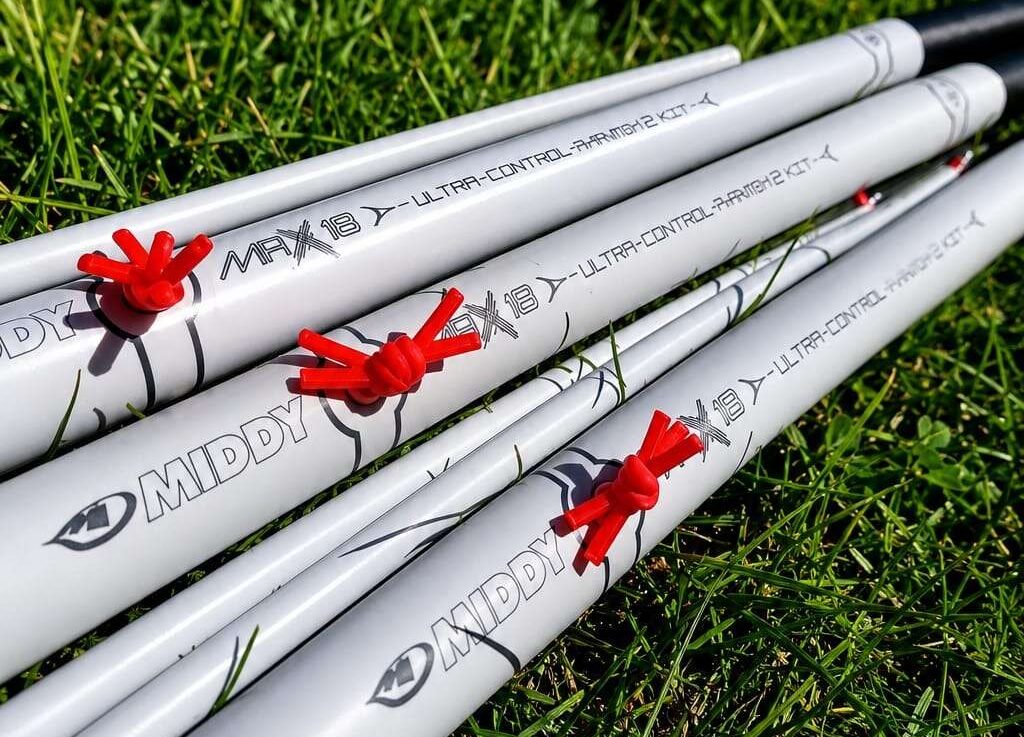
Look for a pole that comes with a couple of spare top kits included. Top kits are the sections nearest the tip, and they’re the part most likely to need replacing if you catch something bigger than expected or misjudge a strike. Having spares from the start means you’re not caught out on your first proper session.
Understanding Top Kits and Elastics
The top kit is where the elastic lives, and the elastic is what actually absorbs the fight when you hook a fish. Without it, most bites would snap your rig or pull the hook straight out.
Elastics come in grades, usually numbered, with lower numbers suited to smaller fish like roach and skimmers, and higher numbers built for carp and bigger silvers. As a rough starting point:
- Light elastics (grade 4-8) for small fish and finesse fishing
- Medium elastics (grade 8-14) for general commercial fishery use, covering most species you’ll meet as a beginner
- Heavy elastics (grade 14+) for margin carp and bigger targets
If you’re not sure what a venue holds, a medium-rated elastic in a spare top kit is a sensible middle ground until you know the water.
How to Set Up a Fishing Pole Rig
A pole rig is simpler than it looks once it’s broken down into parts:
- Float – Choose based on depth and conditions. A lighter float gives a slower, more natural fall of the bait, which often means more bites in calmer water.
- Shot – Small weights spaced along the line to cock the float and present the bait correctly. A strung-out bulk shotting pattern is a reliable, versatile starting point for most commercial fisheries.
- Hook length – A separate length of line tied to the hook, usually lighter than the main line so you lose the hook rather than the whole rig if you snag something.
- Line to elastic connection – This is where the top kit’s elastic meets your main line, usually via a connector or loop.
You can buy pre-tied rigs on winders if you’d rather skip this step early on, which is a perfectly sensible way to start while you build confidence.
Plumbing the Swim
Before you start fishing, take the time to plumb the full width of your swim, not just where you plan to feed. Dragging a plummet across the bottom tells you where the deeper spots, shallow patches, and underwater features are, and fish often sit right on those features rather than in open water. It’s a step a lot of beginners skip, and it’s usually the difference between a quiet session and a good one.
Margin Fishing: A Good Tactic to Learn Early
Fishing close to the bank, known as margin fishing, is one of the most productive tactics on commercial fisheries, particularly for carp. Fish often patrol close to the margins looking for food, especially later in the day. A short pole set-up and a simple rig fished tight to the bank can outperform fishing further out, and it’s a great way to build confidence landing bigger fish on a pole before you tackle longer, more technical swims.
Kit Worth Having From Day One
A few extras make pole fishing considerably easier once you’re past the absolute basics:
- A pole roller, useful once you’re fishing poles longer than around 10m, keeping the pole supported and steady as you ship it in and out
- A landing net and handle, matched to the size of fish you’re likely to meet
- A keepnet, if you’re planning to keep fish for a match or weigh-in
None of this needs to be expensive to start. Build your kit as your fishing develops, and replace or upgrade pieces as you find out what suits your own style on the bank.
How to Set Up a Fishing Pole: Final Notes
Pole fishing rewards patience more than expensive gear. Get the basics right, a sensible pole, a couple of well-matched top kits, and a simple rig, and you’ve got everything you need for your first proper session.
Browse our full range of fishing poles, top kits and spares, and pole rollers, all designed and built by anglers who fish the same waters you do. Find out more about Middy.